
VoIP Telephony: The Future of Business Communication
An IP PBX is an Internet-based phone system that offers cost-effective, high-quality communication compared to traditional analog lines. It supports advanced features such as mobility, call routing, and conferencing.

Benefits of an IP PBX
Cost savings & reduced IT infrastructure
Flexible deployment options
Advanced features
Easy maintenance
Understanding On-Premise vs. Hosted/Virtual IP PBXs
On-Premise IP PBXs
An on-premise IP PBX is a phone system where the hardware and components are housed on-site at your location. This traditional setup is what many envision when thinking of a PBX. Here are some key benefits of an on-premise IP PBX:
- No risk of fee increases
- Lower total cost of ownership, especially as the system expands
- Complete control and flexibility to switch solutions or mix-and-match components
- Full autonomy over your equipment, allowing customization to meet specific needs
- In-depth knowledge of your system’s capabilities, since you manage its deployment

Pros & cons of On-Premise IP PBX

Hosted IP PBX & Virtual IP PBX
A hosted IP PBX is a phone system where the hardware resides off-site, often referred to as being “hosted” remotely. Commonly known as “cloud” phone systems, the components of a hosted IP PBX are stored in the Cloud, essentially on a server located elsewhere and accessed via the Internet.
A virtual PBX is often considered synonymous with a hosted PBX and represents a virtualized rendition of a phone system. In essence, the majority of the phone system’s hardware is situated in a data center or “cloud” facility.
Pros & cons of Hosted PBX
Phones options to use with an IP PBX
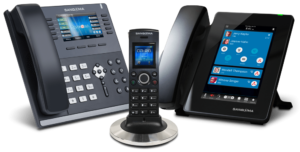
IP Phones
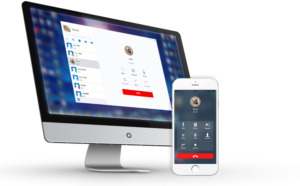
Desktop Softphone
Mobile Softphone
Some of the brands we work with